
What Italian Language(s) Does Italian Film Speak?
Monday, October 16, 2017 – 6:30-8:30pm鈥�
Lecture Hall 101, Feliciano School of Business
See media coverage for this event
厂别别听
This is the third part of the “” series, designed by the Inserra Chair in Italian and Italian American Studies in 2016 and inspired by a collection of essays edited by聽Daniele Balicco聽–聽Made in Italy and Culture.
This episode looks at what can be considered the quintessential Made in Italy product: the Italian language. The specific lens adopted is cinema given the fundamental role it plays in the diffusion of the Italian language abroad, or rather the Italian languages since Italian cinema agilely records regional dialects, foreign language interferences, as well as parlances used in specific job sectors or social circles. Most interestingly, the Italian language circulates on international screens through the voices of Italian actors thanks to the practice of subtitling, which ensures that dialogues are conveyed in their original forms in terms of pronunciation and inflection while being enriched by the body language of the actors. A non-Italian-speaking audience is thus exposed to the complexity of the Italian linguistic palette through a medium that in mirroring the country’s contemporary reality literally functions as a “sounding board” for the Italian language in ways that are more incisive than, for instance, opera whose Italian is less linked to today’s Italian, or theater which can be brought to foreign audiences much less frequently.
The choice of cinema for this event is linked to the theme of the 2017 Week of the Italian Language: 鈥淚talian at the cinema, Italian in the cinema.鈥� The event is officially presented in connection to this initiative, which takes place every October worldwide as part of the Italian government鈥檚 efforts in the promotion of the Italian language via the Ministry of Foreign Affairs and International Cooperation.
Program
- Introductory remarks:聽听(Inserra Chair, 精品成人福利在线 University)
- Greetings: Donatella Baldini (Cultural Attach茅e, Italian Cultural Institute, NY)
- Speakers:
Giuseppe Antonelli听(Professor of Linguistics, University of Cassino, Italy): “The Italians of Cinema” (in Italian with PP in English and consecutive translation into English)
Jerome Rudes听(Subtitling Specialist, Mistral Artist Management, NY): “Subtitling Italian Cinema Gems for American Audiences” - Q&A will follow
Giuseppe Antonelli: “The Italian Language(s) of Cinema”
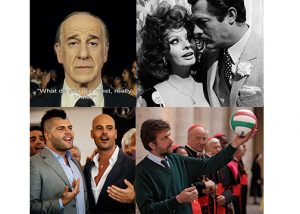
There are different ways in which the Italian language is used in movies, and world-renowned films like聽The Great Beauty聽by Paolo Sorrentino,聽骋辞尘辞谤谤补丑听by Matteo Garrone and聽Habemus papam聽by Nanni Moretti are perfect examples of this variety. Three different shades of the language for three different worlds: the one of power and success used in the capital, Rome; the mob-related one of Naples and the one that belongs to the Vatican and religion, which is almost an independent language. The same distinction applies to the three different traditions of the use of Italian language in movies: the one of aphorisms and sound bites, the one that is closer to local dialects, and the more refined and reflexive one. Using these movies as examples, the first half of the presentation will provide a quick linguistic map of today鈥檚 Italian cinema. The second part of the presentation will be dedicated to specific scenes from other films in which language becomes the protagonist in terms of vocabulary and grammar. The selection includes excerpts from Moretti’s聽Palombella rossa, neorealist films like聽Umberto D.,聽comedies Italian style like聽We All Loved Each Other So Much, and the classic jokes by Tot貌 and Fantozzi, among others. This all goes to show that, as stated by the protagonist of Leonardo Sciascia’s book聽A Simple Story, 鈥淭he Italian language is not the Italian language: it is the act of reasoning in itself.鈥�
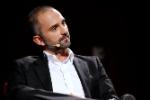
聽teaches Italian Linguistics at the University of Cassino, Italy. He writes for a number of newspapers and websites such as聽Corriere della Sera聽and Treccani.it (on their portal dedicated to Italian language). He was the anchorman of a radio show called 鈥淟a Lingua Batte鈥� on Radio Tre and since 2015 he has been telling the story of Italian words during the RAI 3 TV show 鈥淚l Kilimangiaro.鈥� In 2003 his novel聽罢谤别苍颈迟脿听(Pequod) was nominated for the Premio Strega. Among his most recent works:聽Comunque anche Leopardi diceva le parolacce. L鈥檌taliano come non ve l鈥檋anno mai raccontato听(Mondadori, 2014);聽Storia dell鈥檌taliano scritto聽co-written with Matteo Motolese e Lorenzo Tomasin (Carocci, 2014); the Italian grammar聽L鈥檌taliano, gli italiani聽(Einaudi Scuola, 2016) co-written with Emiliano Picchiorri; and the essay聽Un italiano vero. La lingua in cui viviamo听(Rizzoli 2016).
Jerome Rudes: “Subtitling Italian Cinema Gems for American Audiences”
This presentation will illustrate some of the challenges and pleasures of rendering Italian cinema understandable for a new generation of English-speaking audiences with high-caliber subtitling, utilizing clips from two classics –聽Il boom聽by Vittorio De Sica (1963) and聽Matrimonio all鈥檌taliana听(Marriage Italian Style) by Vittorio De Sica (1964) – and two contemporary Italian films –聽Terraferma聽by Emanuele Crialese (2011) and聽Mid-August Lunch聽by Gianni Di Gregorio (2008).

A dual citizen of the United States and France,聽聽lives between New York City and Provence. Rudes is the 2014 winner of “La M茅daille d’Or du Rayonnement Culturel” for the United States for his work in subtitling as well as his cross-cultural film curating after 25 years as President of the Avignon Film Festival. From 2002 to 2014, Rudes served as US Coordinator for LVT-USA, one of the world leaders in 35mm film and digital subtitling. In that capacity, Rudes supervised the subtitling of over 200 feature films and shorts, including scores of official selections for the Cannes, Berlin, Venice, Sundance, Locarno, Tribeca and Toronto Film Festivals. Rudes鈥� work has encompassed new titles as well as restorations. As of March 1, 2014, Rudes鈥� own company,聽, took over all subtitling and captioning activity from LVT-USA. Currently, Rudes is working with UCLA Film Archive as well as with The Film Foundation.
- Presented by the Inserra Chair in Italian and Italian American Studies and the聽听() at 精品成人福利在线 University with the co-sponsorship of the聽
For events on similar topics, click聽
Resources:
聽on the Portale della lingua italiana website